
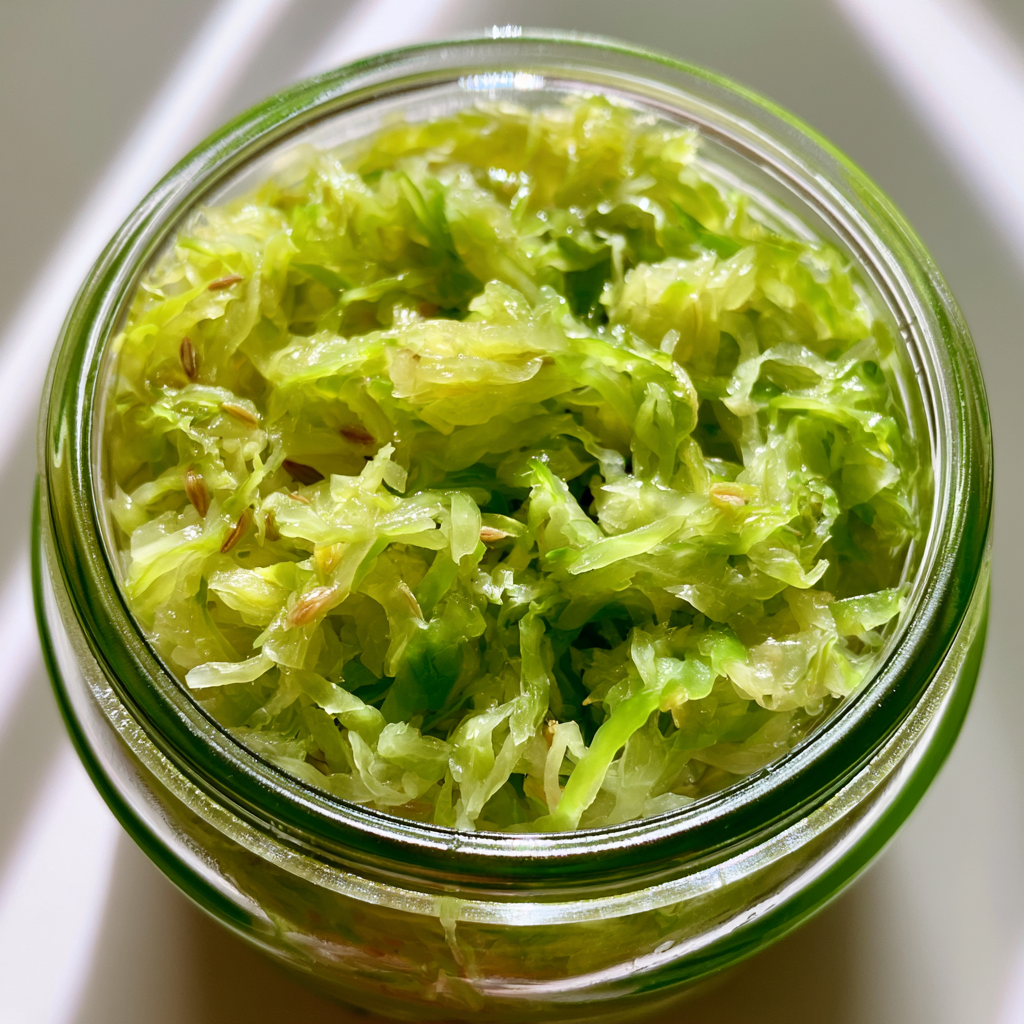
Homemade Sauerkraut: 5 Easy Steps to Tangy Perfection
Homemade Sauerkraut is a delightful and nutritious fermented dish that transforms simple green cabbage into a tangy, crunchy side that packs a flavor punch. This recipe saves time while providing a unique and satisfying addition to your meals. Have you ever wondered how to make your own sauerkraut at home? Imagine the enticing aroma of fermented cabbage wafting through your kitchen, the vibrant colors of the ingredients, and the crisp texture that brings each bite to life. The tart taste of homemade sauerkraut can elevate your sandwiches, salads, and even main dishes, turning them into something extraordinary.
When you think of fermented foods, you might think of their health benefits. Fermented foods like sauerkraut are rich in probiotics, which promote a healthy gut microbiome. The main ingredient, green cabbage, is not only versatile but also packed with essential nutrients. The fermentation process enhances its nutritional profile, making it a significant source of vitamins and minerals. For instance, cabbage contains Vitamin C, which is crucial for immune health and skin elasticity. Additionally, it provides Vitamin K, which supports bone health, and fiber, which aids digestion.
Moreover, the addition of coarse sea salt in this recipe helps to draw out the moisture from the cabbage, creating an ideal environment for fermentation. As a result, you get a deliciously crunchy texture that is satisfying to eat. Did you know that fermented foods like sauerkraut can enhance the absorption of nutrients? This occurs as the fermentation process breaks down complex compounds, making vitamins and minerals more bioavailable to your body.
In addition to the health benefits of sauerkraut, this homemade version is a game-changer for your meals. Store-bought sauerkraut often contains preservatives and lacks the depth of flavor that comes from homemade fermentation. This specific recipe uses simple ingredients like green cabbage, coarse sea salt, and optional caraway seeds, which add a unique flavor profile. It is a time-honored tradition in many cultures, making it a family favorite and a fantastic project for beginners looking to dive into the world of fermentation.
Why is this recipe special? Unlike other versions that may include unnecessary additives or complicated steps, this recipe focuses on simplicity and authenticity. It allows you to control the fermentation process and adjust the flavor to your liking. This easy method works well for families, beginners, or anyone looking to add a nutritious element to their meals without a lot of fuss. You can enjoy the satisfaction of crafting your own homemade sauerkraut, knowing exactly what goes into it.
To summarize, the prep time for this dish is a mere 15 minutes, and it requires no cooking. The skill level is beginner, making it perfect for weeknight dinners or meal prep. You can store this tangy delight and use it for various dishes or even as a healthy snack!
What is Homemade Sauerkraut
Homemade sauerkraut is a fermented dish made primarily from finely shredded green cabbage and salt. The process of fermentation occurs when the natural bacteria present on the cabbage convert sugars into lactic acid, creating a tangy flavor and preserving the cabbage. This traditional method of food preservation has been enjoyed for centuries, offering both a delicious side dish and a powerhouse of health benefits.
Why You Will Love This Recipe
- It’s incredibly easy to make with just a few ingredients.
- The fermentation process enhances the cabbage’s nutritional value.
- You can customize the flavor by adding spices like caraway seeds.
- Homemade sauerkraut is free of preservatives and additives found in store-bought versions.
- It can last for months in your fridge, allowing you to enjoy it whenever you desire.
Ingredients You Need
- Green Cabbage: The main ingredient, it’s rich in vitamins and fiber, supporting digestive health.
- Coarse Sea Salt: Essential for drawing out moisture and creating the ideal fermentation environment.
- Caraway Seeds: Optional, these seeds add a distinct flavor that complements the tanginess of the sauerkraut.
- Water: Used if needed to ensure the cabbage is submerged during fermentation.
How to Make Homemade Sauerkraut Step by Step
- Start by removing the outer leaves of the cabbage and cutting it into quarters. Then, slice the cabbage thinly into fine shreds.
- Place the shredded cabbage into a large mixing bowl and sprinkle the coarse sea salt over it.
- Massage the cabbage with your hands for about 5-10 minutes. This helps to release the natural juices from the cabbage.
- If desired, mix in the caraway seeds for added flavor.
- Pack the cabbage tightly into a clean glass jar or fermentation crock, pressing down to eliminate air pockets.
- Ensure the cabbage is submerged in its liquid. You can add a small weight or a clean stone to keep it submerged.
- Cover the jar with a cloth or a fermentation lid to allow gases to escape while keeping contaminants out. Let it ferment at room temperature for 1-4 weeks, depending on your taste preference.
Pro Tip: Use a sharp knife or a mandoline for even slices, ensuring uniform fermentation.
Pro Tip: The cabbage should be wet and pliable, which indicates enough moisture for fermentation.
Pro Tip: Leave about an inch of headspace at the top of the jar to allow for expansion during fermentation.
Expert Tips for Best Results
- Make sure all utensils and containers are clean to prevent unwanted bacteria.
- Store the jar in a cool, dark place to control the fermentation rate.
- Check your sauerkraut daily; if any scum forms on the surface, remove it with a clean spoon.
- Taste your sauerkraut after one week to see if it has reached your preferred tanginess.
- Once it reaches your desired flavor, transfer it to the refrigerator to slow down fermentation.
- For a unique twist, experiment with adding other vegetables, such as shredded carrots or beets, for additional flavors and colors.
Variations and Substitutions
- Dairy-Free Option: Skip any dairy ingredients; this recipe is naturally dairy-free.
- Low-Carb Variation: Use Napa cabbage for a lower carbohydrate content.
- Seasonal Variation: Add seasonal spices like dill for a summer twist.
- Regional Twist: Incorporate different types of cabbage, such as red cabbage, for a vibrant color and flavor.
How to Serve and Store
Serve your homemade sauerkraut as a zesty side dish alongside meats, or use it as a topping for sandwiches and salads. It pairs especially well with sausages and pork dishes. Store your sauerkraut in the fridge, where it can last for up to 6 months. You can freeze sauerkraut, but it may alter the texture; if you do freeze it, use it within 3 months. For reheating, simply add it to your dishes at the end of cooking to preserve its crunchiness.
Frequently Asked Questions
How long does homemade sauerkraut last?
Homemade sauerkraut can last for up to 6 months in the refrigerator if stored properly.
Can I use table salt instead of coarse sea salt?
Yes, but coarse sea salt is recommended for better fermentation results.
What should I do if my sauerkraut is too salty?
You can rinse it with water before serving to reduce the saltiness.
Can I add other vegetables to my sauerkraut?
Yes, you can add shredded carrots, beets, or other vegetables for added flavor and nutrition.
Is homemade sauerkraut safe to eat?
Yes, as long as it has been fermented properly and stored in a clean environment.
How do I know when my sauerkraut is ready?
Your sauerkraut is ready when it has a tangy flavor and the desired crunchiness, typically after 1-4 weeks.
In conclusion, making Homemade Sauerkraut is not only a rewarding kitchen project but also a way to enhance your meals with its tangy flavor and numerous health benefits. With its rich source of probiotics and vital nutrients, this homemade version stands out from store-bought options. Try this recipe today and leave a comment below!
Print
Homemade Sauerkraut: 5 Easy Steps to Tangy Perfection
- Total Time: 1415
- Yield: 1 quart 1x
- Diet: Vegetarian
Description
This easy homemade sauerkraut recipe ferments cabbage into a tangy and crunchy side dish, perfect for sandwiches, salads, or as a topping for various dishes.
Ingredients
- 1 medium green cabbage
- 3 tablespoons coarse sea salt
- 1 teaspoon caraway seeds
- as needed water
Instructions
- Remove the outer leaves of the cabbage and set aside. Cut the cabbage into quarters, remove the core, and slice the cabbage thinly.
- In a large bowl, combine the sliced cabbage and salt. Use your hands to massage the salt into the cabbage for about 5-10 minutes, until the cabbage starts to release its juices.
- If using, add caraway seeds and mix well.
- Transfer the cabbage mixture into a clean glass jar or crock, pressing down firmly to pack it tightly. Leave about 1-2 inches of headspace at the top.
- If the cabbage is not submerged in its own juices, you can add a little filtered water to cover it. Place the reserved outer leaves on top to help keep the shredded cabbage submerged.
- Cover the jar with a clean cloth and secure it with a rubber band, or use a fermentation lid.
- Allow the cabbage to ferment at room temperature (around 65-75°F) for about 1 to 4 weeks, tasting it every few days until it reaches your desired level of tanginess.
- Once fermented, transfer the sauerkraut to the refrigerator to slow down the fermentation process. It can be stored in the fridge for several months.
- Prep Time: 15
- Category: Condiment
- Method: Fermentation
- Cuisine: German
Nutrition
- Serving Size: 1/4 cup
- Calories: 20
- Sodium: 180
- Fat: 0
- Carbohydrates: 4
- Fiber: 2
- Protein: 1
- Cholesterol: 0
Keywords: homemade sauerkraut, fermented cabbage, easy sauerkraut recipe, cabbage fermentation, probiotic foods